Quick Facts
A formidable Assyrian king who reshaped Nineveh, crushed rebellions, and left vivid records of imperial power.
Conversation Starters
Life Journey
Born to the Assyrian royal household that would soon be dominated by Sargon II. Raised amid court officials, scribes, and generals, he learned Akkadian literacy and the ideology of Ashur’s universal kingship.
As Sargon II took the throne, the young prince witnessed rapid campaigns and deportations that expanded the empire. He gained firsthand exposure to provincial administration, tribute systems, and Assyria’s siege warfare traditions.
In Sargon II’s mature reign, Sennacherib held senior responsibilities that linked palace logistics to field operations. He worked with governors and army commanders, building networks that later stabilized his own accession.
Sargon II died on campaign, an ominous event in Assyrian religious politics. Sennacherib secured the throne, reassured elites and temples, and prepared for revolts that often followed a royal succession.
He prioritized Nineveh over Dur-Sharrukin, redirecting labor, tribute, and artisans to the city. The decision anchored royal authority in a new monumental landscape designed to broadcast stability and divine favor.
Merodach-baladan II reasserted power in Babylon, challenging Assyria’s southern frontier. Sennacherib campaigned to restore control, mixing battlefield pressure with the installation of compliant Babylonian leadership.
He reorganized governance across Babylonia, relying on deportations, garrisons, and loyal local notables. The policy aimed to prevent coalition-building among Chaldean and Aramean groups hostile to Assyrian rule.
Cities in Phoenicia and Philistia, backed by Egyptian forces, resisted tribute and Assyrian oversight. Sennacherib attacked fortified centers and reimposed vassal arrangements, showcasing the empire’s reach to the Mediterranean.
At Lachish, Assyrian siege ramps and infantry assaults crushed a key Judean stronghold, later immortalized in palace reliefs. Hezekiah of Judah sent heavy tribute, while Jerusalem avoided capture amid contested ancient accounts.
He built the “Palace Without Rival,” filling it with reliefs, inscriptions, and controlled access routes for ceremonies. Thousands of workers and imported materials turned Nineveh into a symbolic center of Assyrian might.
Sennacherib’s engineers cut canals and aqueduct systems to bring water from upland sources to the capital. These projects supported gardens, agriculture, and population growth while advertising the king as master of nature.
To strike Chaldean allies, Assyria launched an unusual seaborne campaign using Phoenician shipwrights and crews. The effort projected power into coastal and marsh regions that often sheltered Babylonian resistance leaders.
A large coalition faced Assyria near Halule, with Babylonian and Elamite forces contesting southern dominance. Sennacherib’s inscriptions claim success, but the prolonged conflict revealed how costly Babylonia was to control.
After years of unrest and rival claimants, he ordered Babylon razed, its temples and walls dismantled and its population dispersed. The act shocked Mesopotamia, challenging religious sensibilities tied to Marduk’s cult and the city’s prestige.
In Babylon’s aftermath, he restructured provincial oversight to prevent another unified revolt. Assyrian officials, garrisons, and deported labor were used to reshape the political landscape along the Euphrates and Tigris.
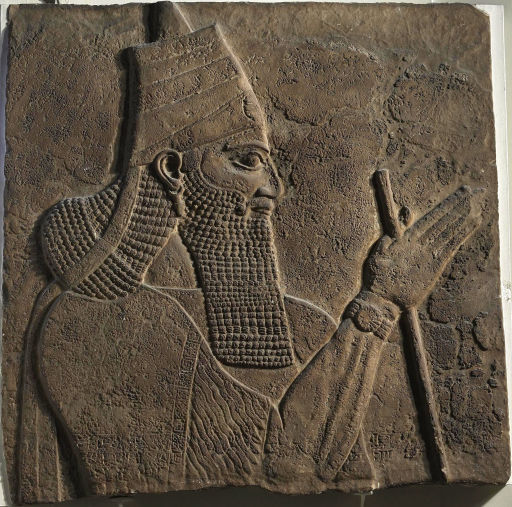
Court workshops produced relief cycles and inscriptions that celebrated sieges, tribute, and the king’s piety to Ashur. The curated imagery reinforced hierarchy at home while intimidating foreign envoys who entered the palace.
Late in the reign, rivalries among princes and court factions sharpened as the succession approached. Political stakes were amplified by Babylonia’s unrest and the need to maintain legitimacy with temples and provincial elites.
Sennacherib was killed in Nineveh during an internal conspiracy attributed in later sources to one or more sons. After turmoil, Esarhaddon secured the throne and moved to reconcile Babylonia, including rebuilding Babylon’s sanctuaries.