Quick Facts
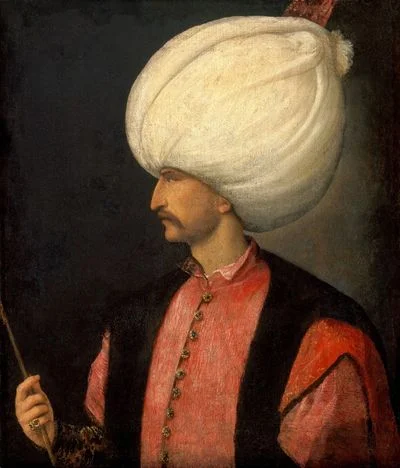
Kanuni — the Lawgiver. Ottoman sultan who made Istanbul the world's greatest city.
Conversation Starters
Life Journey
Suleiman was born to Prince Selim (future Selim I) and Hafsa Sultan in the Black Sea coastal city of Trabzon, where his father served as governor. He was the only surviving son and heir to the Ottoman throne, receiving the name meaning 'man of peace' in Arabic.
Young Suleiman was sent to Istanbul's Topkapi Palace to begin his formal education. He studied history, science, literature, theology, and military arts under the finest tutors. He showed exceptional talent in languages, eventually mastering Ottoman Turkish, Arabic, Persian, and Serbian.
Following Ottoman tradition, Suleiman was appointed governor of Kaffa in Crimea to gain administrative experience. This posting exposed him to the complexities of ruling diverse populations and managing trade routes connecting the Ottoman Empire to the north.
With his father's ascension to the throne as Selim I, Suleiman returned to Istanbul for advanced military training. He learned strategy, siege warfare, and command under experienced Ottoman generals, preparing him for the conquests that would define his reign.
Suleiman accompanied his father Selim I in the decisive Battle of Chaldiran against the Safavid Empire. This victory demonstrated Ottoman military superiority and the effectiveness of gunpowder weapons, lessons Suleiman would apply throughout his reign.
Upon his father's death, Suleiman ascended to the throne as the tenth Ottoman Sultan. Unlike previous successions, his was peaceful with no rival claimants. He inherited the most powerful empire in the world and immediately began planning expansions that would make it even greater.
In his first major campaign, Suleiman captured Belgrade, a key fortress that had resisted previous Ottoman attacks. This strategic victory opened the way for Ottoman expansion into Central Europe and established Suleiman's reputation as a formidable military commander.
After a five-month siege, Suleiman captured the island of Rhodes from the Knights of St. John (Knights Hospitaller). He allowed the defeated knights to leave with honor, demonstrating the chivalrous conduct that earned him respect even among his enemies.
Suleiman broke Ottoman tradition by legally marrying Hurrem Sultan (Roxelana), a former slave from Eastern Europe who had become his favorite concubine. This unprecedented act of love made her his legal wife and queen, causing scandal but also showing his willingness to defy convention.
Suleiman won a crushing victory over the Kingdom of Hungary at Mohács, killing King Louis II and most of the Hungarian nobility. This battle effectively ended Hungarian independence and brought most of Hungary under Ottoman control or influence.
Suleiman led the first Ottoman siege of Vienna, the heart of Habsburg power. Though the siege was unsuccessful due to extended supply lines and early winter, it marked the furthest point of Ottoman expansion into Europe and struck fear throughout Christendom.
Suleiman captured Baghdad from the Safavid Persians, adding Mesopotamia to the Ottoman Empire. This conquest gave him control over important Islamic holy sites in Iraq and established Ottoman dominance in the Middle East for centuries.
Suleiman ordered the execution of his childhood friend and Grand Vizier Ibrahim Pasha, reportedly due to his wife Hurrem's influence and Ibrahim's growing arrogance. This painful decision showed how court politics could override even the strongest personal bonds.
Suleiman codified and reformed Ottoman law, harmonizing secular law (kanun) with religious law (sharia). This comprehensive legal code earned him the title 'Kanuni' (the Lawgiver) among his subjects and remained in effect for centuries, demonstrating his legacy as an administrator.
Suleiman commissioned the master architect Mimar Sinan to build the magnificent Süleymaniye Mosque complex, which remains one of Istanbul's greatest architectural achievements. The complex included hospitals, schools, and public kitchens, reflecting his vision of an ideal Islamic ruler.
In a controversial decision influenced by Hurrem Sultan and Grand Vizier Rüstem Pasha, Suleiman ordered the execution of his eldest and most capable son, Mustafa, on suspicion of treason. This tragic decision haunted him for the rest of his life.
Suleiman concluded the Peace of Amasya with Safavid Persia, ending decades of warfare and establishing borders that would last over a century. This diplomatic achievement brought stability to the eastern frontier and allowed focus on Mediterranean and European affairs.
Suleiman died of natural causes during the siege of Szigetvár in Hungary, still leading his armies at age 71. His death was concealed from the troops until the fortress fell to maintain morale. His 46-year reign was the longest in Ottoman history and marked the empire's golden age.