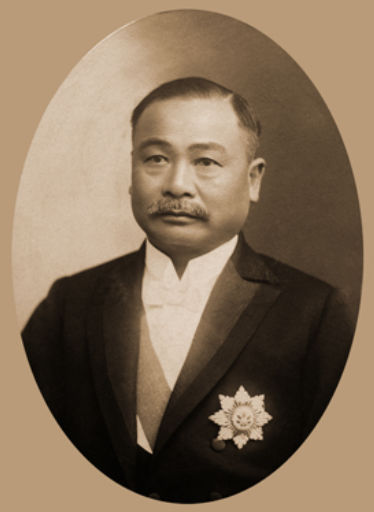
Quick Facts
Pioneering Chinese railway engineer who overcame foreign pressure and harsh terrain to build the iconic Beijing-Zhangjiakou line.
Conversation Starters
Life Journey
Born into a Cantonese family in Xiangshan (near modern Zhongshan) as the Qing dynasty faced foreign pressure after the Opium Wars. The era’s calls for “self-strengthening” shaped public interest in science, engineering, and railways.
Chosen as a young student for the Qing government’s Chinese Educational Mission led by Yung Wing. The program aimed to train technical talent abroad to modernize China’s industry, shipbuilding, and transportation systems.
Admitted to Yale University and focused on civil and mechanical engineering fundamentals, including surveying and structural design. He gained hands-on exposure to American rail technology and professional project organization uncommon in Qing China.
The Qing government ended the overseas mission early amid political backlash and fears of “Westernization.” He returned determined to apply modern engineering skills at home despite limited domestic institutions for advanced technical work.
He sought employment in railway and telegraph-related engineering as China cautiously experimented with modern infrastructure. Working under tight budgets and conservative supervision, he built a reputation for careful measurement and disciplined execution.
He worked on rail construction and maintenance connected to northern trade routes, collaborating with Chinese and foreign technicians. The experience strengthened his skills in route selection, grading, and bridge and tunnel coordination under real deadlines.
China’s defeat by Japan exposed the Qing state’s technological and organizational weaknesses, intensifying debates about modernization. The war’s aftermath increased demand for railways as strategic infrastructure linking ports, capitals, and garrisons.
The Boxer Uprising and subsequent foreign intervention disrupted transportation networks in North China. He observed how rail lines became military targets and strategic assets, reinforcing his insistence on robust construction and dependable operations.
He rose into leadership roles where Chinese engineers increasingly pushed for greater authority over design and management. His competence in surveying and cost control helped him earn trust in an environment dominated by foreign concessions and loans.
The Qing government appointed him chief engineer for a politically symbolic line from Beijing to Zhangjiakou. It was promoted as a Chinese-led project to counter the assumption that only foreign firms could build major railways in China.
Facing severe slopes near Badaling, he designed a Y-shaped switchback at Qinglongqiao to gain elevation safely. The solution reduced gradient demands without excessive tunneling, showing practical adaptation to mountainous North China terrain.
He directed tunneling and alignment work through hard rock and unstable ground, enforcing strict surveying procedures and work discipline. Coordination of labor, explosives, drainage, and ventilation reflected modern project management under Qing constraints.
The line opened earlier than planned, connecting the capital to the frontier gateway at Zhangjiakou with reliable service. Its completion became a public demonstration of Chinese technical capacity and strengthened national confidence in engineering education.
The Xinhai Revolution toppled the Qing dynasty and created administrative upheaval across ministries and rail bureaus. He focused on keeping railway operations stable, protecting technical staff and assets during rapid political transition.
Under the new Republic, he remained a prominent technical leader as China debated how to finance and govern rail expansion. His experience was used to train engineers and standardize practices amid competing regional and foreign interests.
He advocated careful surveying, transparent accounting, and merit-based technical leadership to reduce waste and corruption. His public reputation helped elevate engineers as nation-builders during the warlord-era fragmentation of central authority.
He died after years of intense responsibility during a period of national turmoil and modernization efforts. Soon after, the May Fourth era highlighted science and engineering as paths to national renewal, amplifying his legacy as a pioneer.