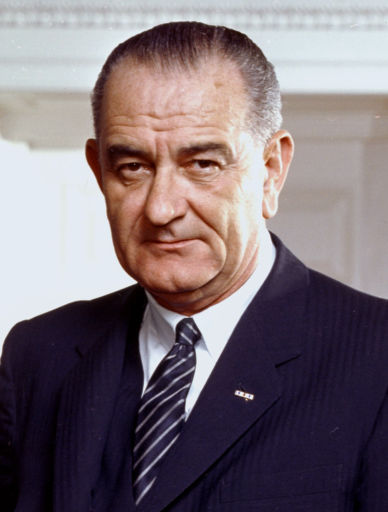
A forceful American president who pushed landmark civil rights and social welfare reforms while escalating the Vietnam War.
会話のきっかけ
人生の歩み
Born in a farmhouse near Stonewall, Texas, to Samuel Ealy Johnson Jr. and Rebekah Baines Johnson. Raised amid rural poverty and politics, he absorbed populist rhetoric and the hard realities of Hill Country life.
Completed studies at Southwest Texas State Teachers College in San Marcos after years of intermittent schooling and work. The experience reinforced his belief that education and government programs could widen opportunity for poor communities.
Worked as a teacher in Cotulla, Texas, at Welhausen School, serving many Mexican American children facing segregation and deprivation. The poverty he witnessed became a lifelong reference point for his later War on Poverty ambitions.
Moved to Washington to serve as secretary to Representative Richard M. Kleberg. He studied committee power, patronage, and dealmaking, building relationships that later fed his formidable legislative network.
Married Claudia Alta "Lady Bird" Taylor in San Antonio after a whirlwind courtship. Her financial backing and political instincts stabilized his ambitions, and she became an essential partner in campaigns and public life.
Appointed Texas director of the National Youth Administration, a New Deal agency aiding students and unemployed youth. He leveraged federal funds to expand training and jobs, learning how programs could be scaled through bureaucracy.
Won a special election to represent Texas’s 10th congressional district after James P. Buchanan’s death. In Congress he aligned with Franklin D. Roosevelt’s New Deal, focusing on rural electrification and public works.
Ran for the U.S. Senate in Texas and narrowly lost to incumbent W. Lee O'Daniel. The defeat sharpened his campaign discipline and strengthened his resolve to master Texas political machines and turnout operations.
Entered active duty in the U.S. Navy Reserve and worked with senior commanders on inspections and logistics. He observed a combat mission in the Pacific and returned to Washington with a heightened interest in defense and technology.
Won the Democratic primary for U.S. Senate by a razor-thin margin over Coke Stevenson, amid controversy about ballot counts in South Texas. He entered the Senate determined to climb leadership ranks and control legislative flow.
After Democrats regained power, he became Senate Majority Leader, the youngest to hold the post at the time. Using the "Johnson Treatment," he brokered compromises and disciplined committees, making the Senate more action-oriented.
John F. Kennedy chose him as vice-presidential nominee to strengthen the ticket with Southern and congressional support. Johnson campaigned vigorously, then navigated an often-limited role while maintaining deep ties to Capitol Hill.
After Kennedy was assassinated in Dallas, he was sworn in aboard Air Force One by Judge Sarah T. Hughes. He pledged continuity while preparing to use his legislative skill to push stalled civil rights and anti-poverty measures.
Worked with leaders like Hubert H. Humphrey and Everett Dirksen to pass the Civil Rights Act of 1964, outlawing major forms of segregation. Later defeated Barry Goldwater decisively, claiming a mandate for the Great Society.
Pushed Medicare and Medicaid, expanded federal education aid, and created programs aimed at poverty and urban decline. After the Selma marches, he signed the Voting Rights Act of 1965, targeting literacy tests and voter suppression.
Following the Gulf of Tonkin Resolution and advice from aides like Robert McNamara, he increased troop deployments and bombing campaigns. The widening war fueled protests and divided the Democratic Party and the wider public.
Amid the Tet Offensive fallout and intense domestic unrest, he declared he would not run for another term. He also ordered a partial bombing halt and pursued peace talks, attempting to limit further escalation.
After leaving office, he retired to the LBJ Ranch, reflecting on his presidency and health. He worked on his memoir, "The Vantage Point," aiming to defend the Great Society while explaining choices made in Vietnam.
Died of heart disease at the LBJ Ranch after years of worsening cardiovascular problems. National leaders and Texans alike marked the passing of a president whose domestic reforms were historic and whose war legacy remained contested.