Quick Facts
Canon of Medicine. Islamic golden age genius whose books taught medicine for 600 years.
Conversation Starters
Life Journey
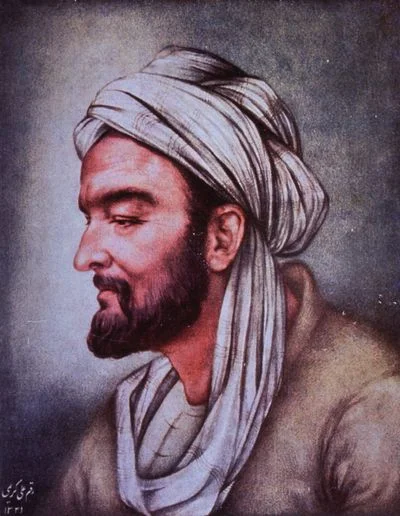
Abu Ali al-Husayn ibn Sina, known in the West as Avicenna, was born into a scholarly family. His father was a government official of the Samanid Empire, providing young Ibn Sina access to the finest education available.
By age ten, Ibn Sina had memorized the entire Quran and much Arabic poetry. His prodigious memory and intellectual gifts were already apparent, astonishing his teachers with his rapid comprehension of complex subjects.
Ibn Sina began studying medicine under various physicians. He quickly surpassed his teachers, mastering medical theory and beginning to treat patients while still a young teenager—an unprecedented achievement.
Ibn Sina began practicing medicine on his own, gaining a reputation for successful treatments. His fame spread throughout the region as he healed patients that other physicians had given up on.
Ibn Sina successfully treated Nuh ibn Mansur, the Samanid ruler, of an illness that had baffled other physicians. In gratitude, the emir granted him access to the royal library—a treasure trove that shaped his encyclopedic knowledge.
Ibn Sina declared he had learned all there was to know by age eighteen, later adding only refinements to this knowledge. He had mastered philosophy, logic, mathematics, astronomy, and natural sciences alongside medicine.
Ibn Sina's father died, and political upheaval accompanied the Samanid dynasty's collapse. These events forced the young scholar to begin decades of wandering between various courts seeking patronage.
Ibn Sina entered the service of the ruler of Khwarezm, joining a court that included the mathematician al-Biruni. Here he began his most productive period of writing while serving as a court physician and scholar.
After years of wandering, Ibn Sina arrived in Hamadan, where he would spend much of his remaining life. He became court physician and eventually vizier, though political intrigues repeatedly endangered his position.
Ibn Sina began composing his medical masterpiece, Al-Qanun fi al-Tibb (The Canon of Medicine). This systematic encyclopedia would become the standard medical text in Europe and the Islamic world for over six centuries.
Political enemies had Ibn Sina imprisoned in a fortress. Even in captivity, he continued writing, composing several treatises and poems reflecting on his situation and philosophical convictions.
Ibn Sina escaped prison in disguise and fled to Isfahan, where the Kakuyid ruler welcomed him. This court would provide the stability he needed to complete his greatest works during his final productive years.
Ibn Sina completed The Canon of Medicine, a million-word encyclopedia systematizing all medical knowledge. Its logical organization and comprehensive coverage made it indispensable for medical education worldwide.
Ibn Sina finished Kitab al-Shifa (The Book of Healing), his encyclopedic philosophical work covering logic, natural sciences, mathematics, and metaphysics. It became one of the largest books ever written by a single author.
Ibn Sina made precise astronomical observations, noting the transit of Venus. His work in astronomy contributed to understanding celestial mechanics, though his primary fame remained in medicine and philosophy.
Ibn Sina accompanied his patron the emir on military campaigns, serving as both physician and advisor. The rigors of travel and camp life began to damage his health, though he continued his scholarly work.
Years of intense work, political stress, and the hardships of campaign life took their toll. Ibn Sina's health deteriorated seriously, though he refused to modify his demanding lifestyle or scholarly output.
Ibn Sina died during a military campaign, possibly from colic he had treated himself—ironically, the greatest physician of his age could not save himself. His tomb in Hamadan remains a pilgrimage site. He left behind over 450 works, fundamentally shaping both Islamic and European intellectual traditions.