Quick Facts
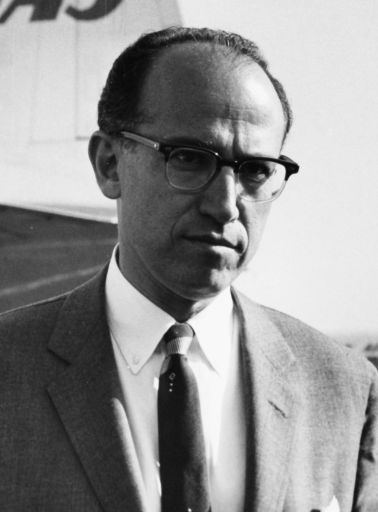
Pioneering medical researcher who developed the first effective polio vaccine and championed public health over profit.
Conversation Starters
Life Journey
Born in East Harlem, New York City, to Dora and Daniel Salk, Jewish immigrants from the Russian Empire. Growing up during rapid urban change, he excelled academically and aimed for medicine as a public service.
Enrolled at the City College of New York, a crucial pathway for talented students from working-class families. He immersed himself in science and literature while planning a medical career focused on research.
Started at New York University School of Medicine, resisting pressure to pursue private practice alone. He gravitated toward laboratory work, believing rigorous science could prevent disease at population scale.
Earned his medical degree from NYU as Europe entered World War II and public health concerns intensified. He sought mentorship in microbiology and virology, fields central to emerging vaccine science.
Joined virologist Thomas Francis Jr. at the University of Michigan School of Public Health to study influenza. Their work helped refine methods for virus cultivation and inactivation, key tools for later vaccine development.
Worked on influenza vaccine research supporting U.S. troops as wartime mobilization prioritized disease control. Collaborations between universities and federal agencies accelerated practical vaccine production and evaluation.
Moved to the University of Pittsburgh School of Medicine to lead the Virus Research Laboratory. There he assembled a team and secured support for tackling poliomyelitis, a disease terrifying American families each summer.
Advanced studies of the three poliovirus types and how antibodies neutralize them, coordinating with the National Foundation for Infantile Paralysis. His lab refined protocols to grow virus and measure immune responses reliably.
Developed an inactivated-virus approach using formaldehyde to render poliovirus noninfectious while preserving antigenicity. Early tests in small groups aimed to show antibody production without causing paralytic disease.
Coordinated a nationwide, double-blind field trial involving about 1.8 million children, organized through schools and local health departments. The National Foundation for Infantile Paralysis backed logistics in an unprecedented public-health campaign.
On April 12, results announced by Thomas Francis Jr. at the University of Michigan declared the vaccine safe, effective, and potent. Church bells rang across the United States as polio prevention entered a new era.
After some Cutter Laboratories batches caused polio cases, public confidence wavered and production paused. The crisis drove tighter federal oversight, improved inactivation checks, and more rigorous manufacturing controls nationwide.
Promoted widespread use of inactivated polio vaccine as cases fell sharply in North America. He engaged international scientists and health ministries, emphasizing careful surveillance and equitable access to immunization programs.
Founded the Salk Institute in La Jolla with backing from the National Foundation (March of Dimes) to create a world-class research environment. Architect Louis I. Kahn designed a landmark campus aimed at fostering collaboration.
As the institute matured, he recruited leading scientists and encouraged cross-disciplinary work spanning immunology, genetics, and neuroscience. He also explored how ethics and social responsibility should guide biomedical innovation.
Shifted attention to broader questions of immune regulation, cancer, and aging, seeking preventive strategies rather than purely therapeutic fixes. His public visibility helped keep biomedical research in the national conversation.
As HIV/AIDS reshaped global medicine, he spoke for sustained vaccine research and public-health coordination. He emphasized careful clinical trials, transparent communication, and international cooperation to confront emerging epidemics.
Died in La Jolla, California, leaving a legacy tied to the near-elimination of polio in many countries. His choice to prioritize public access over personal profit became a lasting ethical touchstone in medicine.