Quick Facts
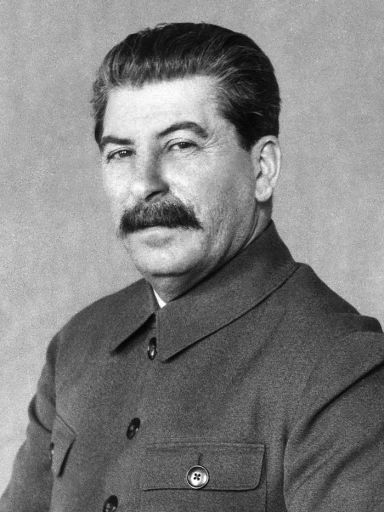
Ruthless Soviet revolutionary who centralized power, industrialized the USSR, and shaped twentieth-century geopolitics through terror and war.
Conversation Starters
Life Journey
Born to cobbler Vissarion Jughashvili and laundress Ekaterine Geladze in the Russian Empire’s Caucasus. His modest upbringing in Gori shaped a hardened worldview amid poverty, violence, and imperial rule.
He enrolled at the Orthodox seminary in Tiflis, a key institution for training clergy in the imperial borderlands. There he read banned literature and grew hostile to church authority and tsarist control.
After leaving the seminary, he moved toward revolutionary politics and underground organizing among workers. He adopted aliases, built contacts, and embraced the Marxist movement that challenged Nicholas II’s regime.
He worked as a professional revolutionary, helping coordinate strikes, propaganda, and clandestine cells. Frequent police surveillance forced him into constant movement and deepened his skill in conspiratorial politics.
When the Russian Social Democratic Labor Party split, he sided with Vladimir Lenin’s Bolshevik faction. The choice tied his career to Lenin’s strategy of disciplined organization and revolutionary seizure of power.
He helped sustain Bolshevik activity during strikes and repression that followed Bloody Sunday. In the Caucasus, he navigated ethnic tensions and police crackdowns while keeping party networks intact.
Bolshevik groups sought funds through illegal methods, including high-profile expropriations in the Caucasus. These operations strengthened his reputation for hard-edged practicality within the revolutionary underground.
Lenin elevated him into the party’s top leadership as Bolsheviks tightened their organizational core. He soon wrote on nationalities policy and expanded influence in the empire’s non-Russian regions.
Arrest and exile removed him from major cities, but not from politics. Siberian banishment hardened his endurance and forged habits of suspicion and control that later marked his rule.
After the tsar’s fall, he returned to Petrograd and helped direct Bolshevik messaging through party press and committees. The volatile year culminated in the October Revolution and Bolshevik seizure of power.
He served in senior posts, including oversight roles tied to security and wartime administration. The Civil War’s brutality normalized coercion, setting precedents for later mass repression under Soviet rule.
He gained the powerful post of General Secretary, controlling appointments and the party bureaucracy. This institutional leverage let him build loyal networks while rivals underestimated the office’s influence.
Lenin’s death triggered a succession struggle among figures like Leon Trotsky, Grigory Zinoviev, and Lev Kamenev. He used alliances and кадровая politics to marginalize opponents and consolidate authority.
He drove rapid industrialization through the First Five-Year Plan, prioritizing heavy industry and state targets. Collectivization of agriculture provoked resistance, repression, and catastrophic disruptions across the countryside.
Aggressive requisitioning and coercive rural policies contributed to mass starvation, especially in Ukraine and the North Caucasus. The state sealed borders, punished “sabotage,” and deepened fear of the security apparatus.
The NKVD arrested party members, officers, and citizens in a vast campaign of terror and denunciation. Public trials targeted former leaders and reinforced his image as the regime’s indispensable guardian.
The USSR concluded a non-aggression pact negotiated by Vyacheslav Molotov and Joachim von Ribbentrop. Secret protocols carved Eastern Europe into spheres of influence, buying time before an expected war.
Hitler’s invasion brought existential crisis and staggering Soviet losses, forcing emergency mobilization. He chaired key wartime bodies, demanded total sacrifice, and relied on commanders like Georgy Zhukov to stabilize fronts.
In meetings with Franklin D. Roosevelt, Winston Churchill, and later Harry Truman, he negotiated Soviet security demands. Red Army occupation enabled pro-Soviet regimes across Eastern Europe, setting Cold War lines.
He suffered a stroke at his dacha and died days later as top officials maneuvered for control. His death opened the way for de-Stalinization and a partial dismantling of the terror apparatus he built.