Quick Facts
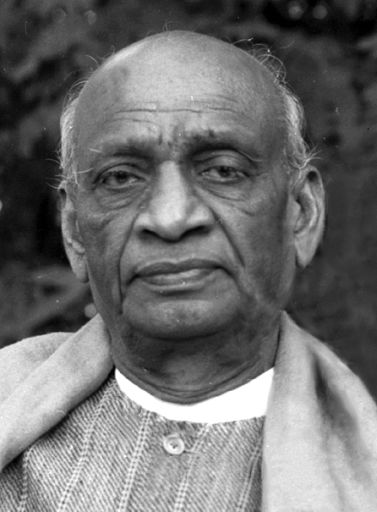
A steadfast nationalist and master organizer who united India’s princely states, earning the title “Iron Man of India.”
Conversation Starters
Life Journey
Born into a Leuva Patidar family in Nadiad, Gujarat, then part of British-ruled Bombay Presidency. His early life unfolded in a rural, agrarian society shaped by colonial administration and local caste networks.
As was customary in many Gujarati communities, he married Jhaverba Patel while still young. The marriage anchored family responsibilities that later coexisted with his demanding legal and political life.
He pursued legal studies through self-discipline and determination, preparing while managing family obligations. He began building a reputation for sharp cross-examination and practical judgment in local courts.
Jhaverba Patel died after a period of illness, leaving him to raise their children largely on his own. The loss hardened his austere temperament and focused him further on professional achievement.
He shifted to Ahmedabad, a major commercial city in Gujarat with active civic institutions and a growing nationalist public sphere. There he became a highly paid barrister, known for efficiency and integrity.
He went to the Middle Temple in London, completing his legal qualifications with remarkable speed and focus. The experience exposed him to imperial politics while sharpening his confidence in public argument.
He entered civic politics and became a key figure in Ahmedabad’s municipal administration, handling sanitation, finances, and wartime pressures. His reputation grew as a no-nonsense administrator who delivered results.
During crop failure and hardship, he helped mobilize peasants in Kheda to seek tax relief from the British administration. Working alongside Mohandas K. Gandhi, he learned mass organization and disciplined noncooperation.
He publicly embraced Gandhi’s non-cooperation program, giving up a prosperous legal career to organize nationalist work. His decision signaled moral commitment and helped expand Congress influence in Gujarat’s towns and villages.
British officials arrested him amid crackdowns on Congress workers following widespread protests and unrest. Imprisonment strengthened his standing among volunteers and deepened his belief in disciplined, organized resistance.
He led farmers in Bardoli against a steep land-revenue increase, coordinating nonpayment and village discipline under intense pressure. After an inquiry and negotiations, authorities rolled back assessments, and he was hailed as “Sardar.”
As Gandhi launched the Salt Satyagraha, he organized protests and volunteer networks across Gujarat. The British arrested him to blunt Congress coordination, but detentions only amplified nationalist momentum.
He chaired the Karachi session where Congress adopted resolutions on fundamental rights and economic policy in the wake of the Gandhi–Irwin Pact. The meeting helped define a future constitutional vision beyond immediate protest politics.
With World War II reshaping imperial priorities, he worked within Congress to balance negotiations, mass pressure, and organizational unity. British wartime controls made coordination difficult, yet he remained a central strategist.
After Congress called for the British to leave India, he was arrested along with other senior leaders in a sweeping crackdown. Long detention tested the movement’s resilience while underground networks carried protests forward.
At independence, he entered the first cabinet under Jawaharlal Nehru, holding the crucial Home portfolio amid Partition violence and administrative transition. He focused on internal security, refugee crises, and building stable institutions.
Working closely with V. P. Menon, he negotiated Instruments of Accession with hundreds of princely rulers, mixing persuasion, guarantees, and firm pressure. This statecraft prevented fragmentation and shaped India’s territorial unity.
When Hyderabad’s Nizam resisted accession, the crisis threatened instability in the Deccan amid communal tensions and militia violence. Under his oversight, India carried out “Operation Polo,” bringing Hyderabad into the Union in September 1948.
He defended an all-India administrative framework, helping preserve and reshape the Indian Administrative Service and police structures for a new democracy. His emphasis on order and competence aimed to prevent post-Partition state failure.
He died in Bombay after years of intense work and worsening health, shortly after India became a republic. Leaders across factions acknowledged his decisive role in uniting princely states and stabilizing the new nation.