Quick Facts
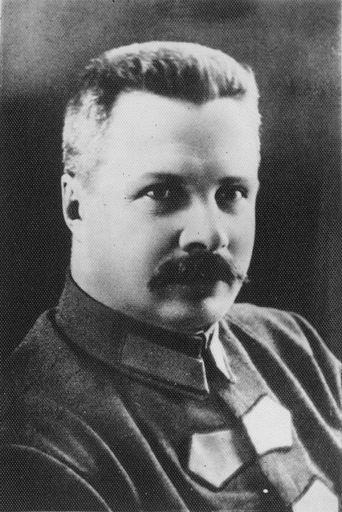
Brilliant Bolshevik commander and strategist who helped secure Soviet victory in the Civil War and shaped early Red Army doctrine.
Conversation Starters
Life Journey
Born to a Moldovan-born feldsher father and a Russian mother in Pishpek, a frontier town of Semirechye. The multiethnic steppe environment later shaped his practical view of empire, revolution, and administration.
Moved to the imperial capital and studied at St. Petersburg Polytechnic Institute amid growing student unrest. Contact with Marxist circles pushed him toward underground political activity and disciplined organization.
Amid strikes and armed clashes, he joined the Russian Social Democratic Labor Party (Bolshevik faction). He helped organize agitational work and learned clandestine methods under tsarist police pressure.
Arrested by the Okhrana after intensified repression following the failed revolution. He faced a harsh sentence, beginning years of imprisonment and exile that hardened his reputation inside the party.
Sent into internal exile under the tsarist system designed to isolate political radicals. In Siberia he continued reading Marxist literature and maintained links with Bolshevik networks despite surveillance.
With Russia at war, authorities tightened control over suspected revolutionaries and exiles. Frunze followed events closely, anticipating that military disaster and shortages would destabilize the monarchy.
After the monarchy fell, he emerged from exile and took a leading role in local soviet politics. He organized Bolshevik influence among workers and soldiers as dual power spread across Russia.
As civil war erupted, he transitioned from party organizer to military commander in the Red Army. Working within Trotsky’s expanding military system, he gained a reputation for strict discipline and planning.
Held senior command in operations that broke the White armies of Admiral Alexander Kolchak in Siberia. Coordinating multiple armies and rail logistics, he helped secure Bolshevik control over the Urals region.
Appointed to the Turkestan Front, he directed campaigns that toppled the Khiva Khanate and the Emirate of Bukhara. The operations expanded Soviet power in Central Asia while confronting local resistance and shortages.
As commander on the Southern Front, he coordinated the final assault on General Pyotr Wrangel’s forces in Crimea. The breakthrough triggered a massive White evacuation from Sevastopol, effectively ending major Civil War fighting.
In the turbulent postwar year of famine and unrest, he was involved in stabilizing Soviet control and rebuilding command structures. His authority rested on battlefield success and close ties to key Bolshevik leaders.
Promoted the idea of a single, coherent military doctrine to align strategy, operations, and political goals. He emphasized staff education, modern planning, and integrating former tsarist specialists under party supervision.
After Vladimir Lenin died, leadership rivalries reshaped the top of the Soviet state and army. Frunze’s growing prominence intersected with tensions among Joseph Stalin, Leon Trotsky, and other senior Bolsheviks.
Replaced Trotsky’s influence with a new leadership team, taking charge of the armed forces as People's Commissar. He pushed reforms aimed at centralization, training, and readiness during a fragile postwar recovery.
Underwent surgery for a long-standing medical condition and died unexpectedly soon afterward. His death fueled rumors of coercion and intrigue within Soviet leadership circles, reflecting the era’s ruthless factional struggles.